


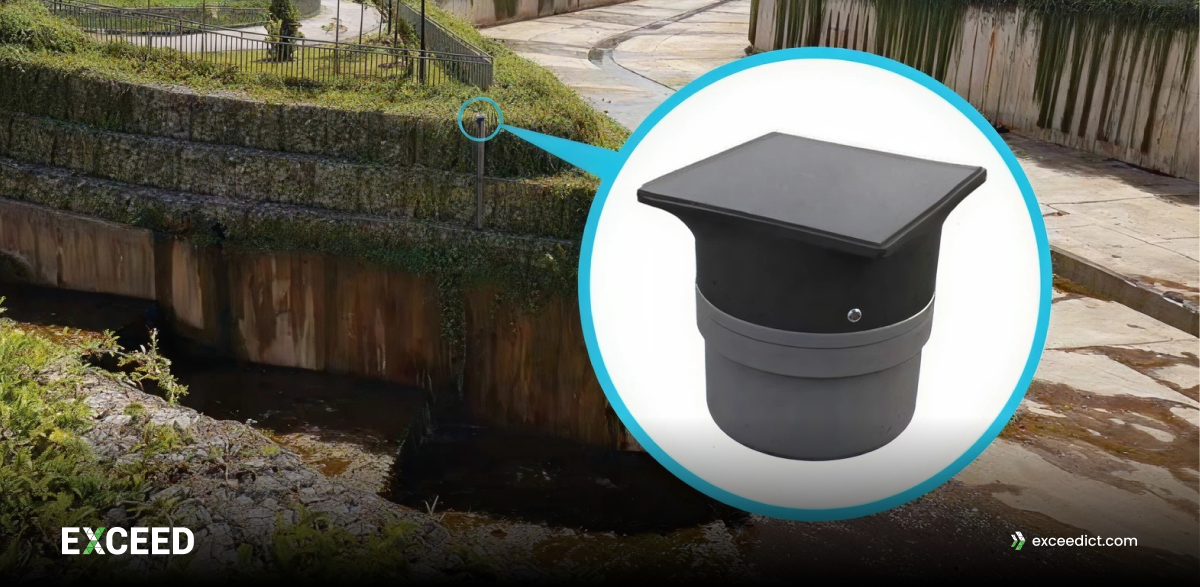
Flooding remains one of the most significant natural hazards across Australia, impacting communities, infrastructure, and businesses every year. With increasingly unpredictable weather patterns and severe storm events, the need for accurate and reliable flood detection has never been greater.
Flood monitoring sensors play a critical role in early warning systems by providing real-time data on rising water levels, rainfall intensity, and environmental conditions. These technologies enable authorities, businesses, and property owners to act quickly, reducing damage and improving safety outcomes.
How Flood Monitoring Sensors Work?
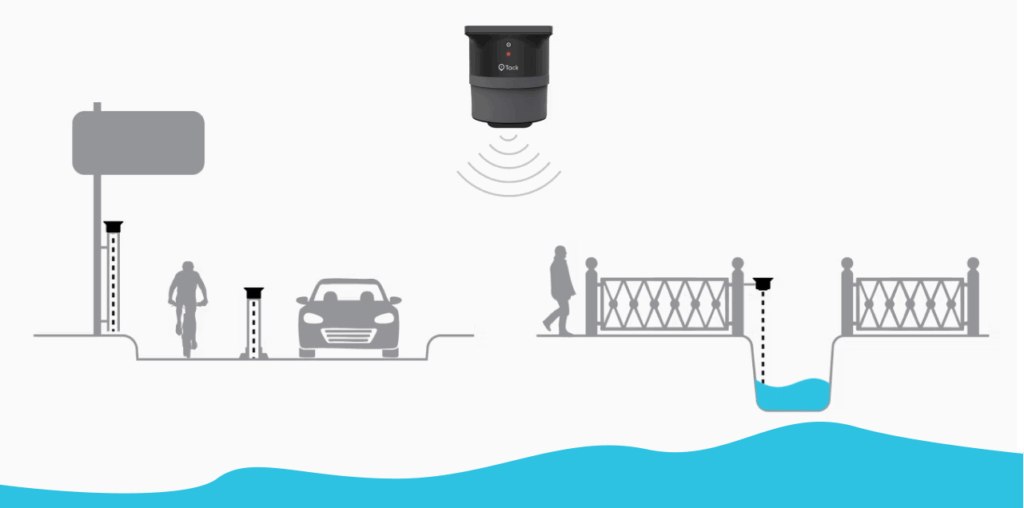 Flood monitoring sensors are designed to measure changes in water levels and environmental conditions using a range of technologies.
These sensors generally fall into two categories: non-contact and contact systems.
Non-contact sensors, such as radar and ultrasonic devices, are installed above the water surface and measure the distance between the sensor and the water level. This approach reduces maintenance and improves reliability in harsh conditions.
Contact sensors, such as pressure transducers, are submerged in water and calculate depth based on the pressure exerted by the water column above them.
Modern systems transmit data in real time using IoT-enabled communication networks such as NB-IoT, LTE-M, and 5G. This data is then integrated into dashboards, mobile apps, and emergency alert systems, allowing for rapid response and informed decision-making.
Flood Monitoring Infrastructure in Australia
Australia’s flood monitoring capabilities rely on a vast network of more than 10,000 gauges distributed across the country. This infrastructure is a collaborative effort involving the Bureau of Meteorology (BoM), local councils, and state emergency services.
The BoM manages approximately one-third of these monitoring stations, while the remainder are operated by regional authorities and agencies such as the NSW State Emergency Service (SES).
Data collected from these sensors feeds into the Australian Warning System, enabling authorities to issue timely alerts and evacuation notices. This collaborative framework ensures a consistent and reliable approach to flood monitoring nationwide.
Core Types of Flood Monitoring Sensors
Radar Water Level Sensors
Radar sensors are widely regarded as the gold standard in professional flood monitoring. Installed above water bodies, they provide highly accurate measurements often within 1 cm precision even in extreme weather conditions. Their non-contact design reduces maintenance and improves long-term reliability.
Ultrasonic Sensors
Ultrasonic sensors use sound waves to determine the distance to the water surface. While cost-effective and easy to install, they can be affected by temperature changes, wind, and environmental noise.
AI-Powered Camera Systems
Smart camera systems are increasingly used to provide visual confirmation of flooding. These systems use artificial intelligence to detect rising water levels and trigger automated alerts, particularly at roads, bridges, and flood-prone crossings.
Emerging Innovations in Flood Monitoring Sensors
5G-Enabled Sensing Technology
Innovative trials in Australia are exploring the use of existing 5G infrastructure as a sensing tool. By analysing how mobile signals reflect off water surfaces, researchers can detect changes in water levels without installing additional hardware.
Satellite-Based Monitoring
Satellite technology is being used to monitor flood conditions in remote and hard-to-access areas. This approach helps fill gaps in traditional ground-based monitoring systems.
AI and Predictive Analytics
Artificial intelligence is transforming flood monitoring by enabling predictive modelling. By analysing historical and real-time data, AI systems can forecast potential flood events, giving communities more time to prepare.
IoT and Connectivity in Modern Flood Monitoring
The integration of Internet of Things (IoT) technology has revolutionised flood monitoring systems. Modern sensors can communicate wirelessly using networks such as NB-IoT, LTE-M, LoRaWAN, and 5G.
These technologies allow for:
- Real-time data transmission
- Remote monitoring and control
- Automated alerts and notifications
- Scalable deployment across large areas
This connectivity ensures that data is accessible anytime, anywhere, improving responsiveness and decision-making.
Flood Monitoring Sensors for Public Infrastructure vs Private Use
Flood monitoring sensors are now broadly categorised into two levels:
- Government and Infrastructure Systems: These systems are designed for large-scale monitoring and are integrated into national warning frameworks. They prioritise accuracy, durability, and wide-area coverage.
- Residential and Commercial Solutions: Smaller, consumer-grade sensors are increasingly popular for homes, farms, and businesses. These systems provide localised alerts and are typically more affordable and easier to install.
Challenges with Traditional Flood Monitoring Systems
Despite their effectiveness, traditional flood monitoring systems face several challenges:
- High installation and maintenance costs
- Complex multi-component setups
- Susceptibility to environmental interference
- Limited coverage in remote areas
These limitations have driven the development of more efficient and accessible solutions.
Introducing a Smarter Solution: Floodfinder by Exceed ICT
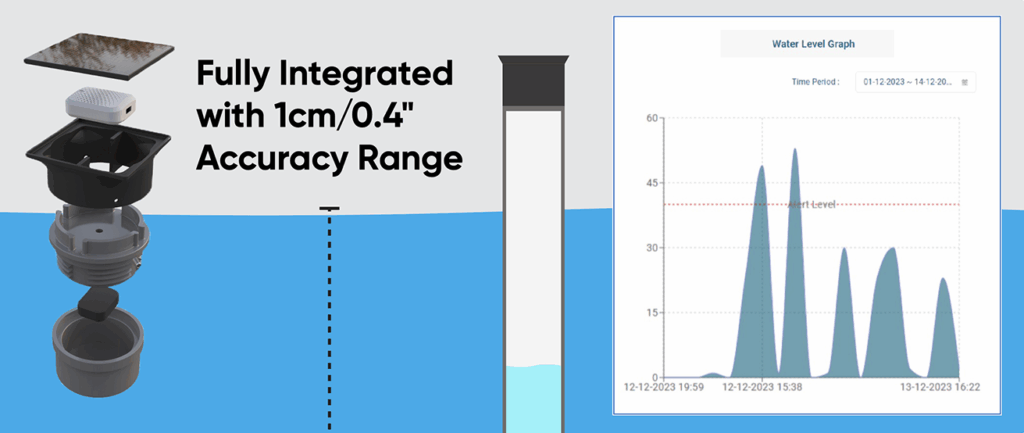 Modern challenges require modern solutions. Floodfinder by Exceed ICT represents a new generation of flood monitoring technology designed to be accurate, accessible, and easy to deploy.
This compact, all-in-one device offers:
- High precision water level detection (up to 1 cm accuracy)
- Simple two-step installation
- Global connectivity across LTE-M, NB-IoT, and GPRS networks
- Solar-powered operation with long battery life
- Integrated dashboard and alert system
Floodfinder eliminates the complexity of traditional systems, making advanced flood monitoring accessible for residential, commercial, and government applications.
Key Benefits of Advanced Flood Monitoring Sensors
The adoption of modern flood monitoring sensors provides numerous advantages:
- Faster emergency response through real-time alerts
- Improved public safety and risk management
- Reduced infrastructure damage and financial losses
- Enhanced decision-making through data insights
The Future of Flood Monitoring in Australia
The future of flood monitoring in Australia is moving towards smarter, more connected systems. With the integration of AI, IoT, and advanced communication networks, monitoring solutions are becoming more accurate, scalable, and accessible.
As technology continues to evolve, communities and businesses will be better equipped to respond to flood risks and protect what matters most.
Conclusion
Flood monitoring sensors are a vital component of Australia’s disaster management strategy. From large-scale government infrastructure to compact, smart devices, these technologies play a crucial role in safeguarding lives and property.
With ongoing innovation in AI, IoT, and connectivity, flood monitoring is becoming more efficient and widely accessible. Investing in modern solutions is no longer optional it is essential for building resilient communities in the face of increasing climate challenges.
Looking for a Flood Monitoring Sensors in Australia?
If you need reliable flood detection for infrastructure, farms, or commercial sites, Floodfinder by Exceed ICT provides real-time monitoring with simple deployment.
Call us on 1300 832 639 or simply search “Exceed ICT” on Google Maps to find a location near you and connect with our team today.
We also provide
Telecoms Expense Management, Device Deployment, Mobile Fleet management, Telstra mobility Managed Services.
Improve Business Core values, Business Consulting, Network Management, Telstra Expense Management and many more Services.
FAQs
What are flood monitoring sensors?
Flood monitoring sensors are devices used to measure water levels, rainfall, and environmental conditions to detect and predict flooding.
Which flood sensor is most accurate?
Radar water level sensors are generally considered the most accurate, offering precision up to 1 cm.
How does Australia monitor floods?
Australia uses a network of over 10,000 gauges managed by the Bureau of Meteorology, local councils, and emergency services.
Are flood monitoring sensors suitable for homes?
Yes, many modern systems are designed for residential use, offering affordable and easy-to-install solutions.
What is the role of IoT in flood monitoring?
IoT enables real-time data transmission, remote monitoring, and automated alerts, significantly improving response times.